
Pattern, Color and Traction
- Stamped patterns give concrete the appearance of stone, slate, brick, planks or tile through texture pressed into the surface.
- Color and borders change the overall look, while the slab layout still needs to account for drainage and joints.
- A sealed surface needs ongoing assessment for wear and wet traction, with care instructions set by your technician.
Choosing Texture, Color and Care for Your Slab
Stamped concrete combines a patterned surface with a color plan, but the right combination starts with how the slab will be used. A dining patio, a narrow walk and a driveway have different demands. Tell your technician where water collects, which edges meet planting beds and how furniture or vehicles cross the surface.
What Does Stamped Concrete Look Like Across a Patio?
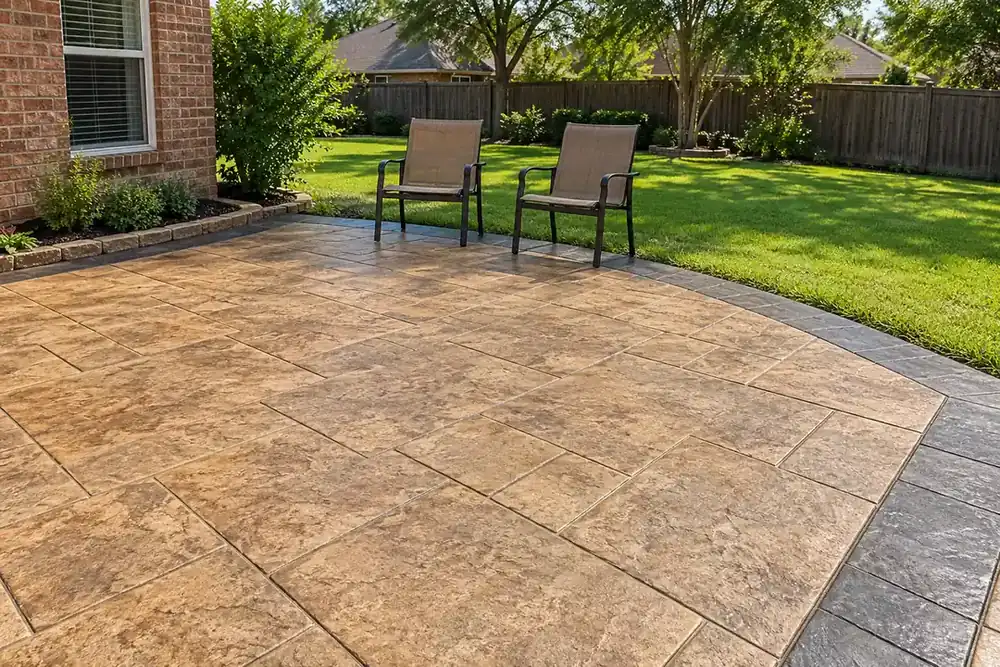
Stamped concrete resembles separate stones, bricks, planks or tiles impressed into a continuous slab. Stamped concrete designs combine those shapes with surface texture, while planned joints remain part of the layout.
| Pattern | What it looks like | Where it is used |
|---|---|---|
| Stone | Irregular pieces with varied outlines | Patios and winding walks |
| Slate | Broad sections with a layered surface texture | Patios, entries and driveways |
| Brick | Small rectangles in straight or interlocking arrangements | Walks, borders and courtyard patios |
| Wood plank | Long narrow boards with grain impressions | Sitting areas and garden paths |
| Tile | Regular squares or rectangles | Dining patios and geometric layouts |
Pattern size matters beside doors, drains and narrow edges. Large shapes can look crowded on a small landing; tiny repeats can make a broad driveway look busy. Ask how the pattern will finish at the perimeter instead of choosing from a close-up alone.
Color Families and Border Placement
Stamped concrete colors commonly include warm tans, browns, terracotta tones, cool grays and charcoal accents. Color can be added to fresh concrete or applied to its surface. The method affects the appearance of worn areas and the options for later attention.
Look at samples with the brick, siding and landscaping around the slab. A small sample helps narrow the choice, although the completed surface can show variation. Discuss whether the goal is subtle shading or a stronger contrast between the main field and its border.
For concrete patio designs, a quiet center with a darker edge can frame the sitting area. Concrete driveway designs also need a border layout that works around the entrance and any changes in width. Your technician checks the slope, drainage outlet, nearby roots and delivery access while planning those edges.
Is Stamped Concrete Slippery Along Wet Walking Routes?
A stamped surface can be slippery when wet, depending on its texture, sealer, wear and contamination. Assess the finished surface and where water reaches it; a pronounced pattern alone does not establish good traction.
Slip-resistant coatings are among the finishes the American Cement Association lists for concrete. Ask about texture and coatings for wet areas. Ask your technician how the proposed finish will perform along a wet walking route, especially near steps or a downspout. No finish removes the need for care on wet pavement.
Sealing helps protect the decorative surface and influences how deep the color looks. Sun exposure, use and sealer wear can change the appearance over time. Have your technician assess fading, dull patches or uneven sheen and decide whether cleaning, resealing or another service is appropriate. Use the resurfacing and sealing service to discuss an existing surface.
How Expensive Is Stamped Concrete Compared With Broom Finishing?
Stamping generally adds work for pattern placement, color and detailing compared with a plain broom finish. A broom finish provides a simpler textured appearance without the repeated decorative shapes. Compare the decorative tasks alongside removal needs, access and slab condition when discussing the project scope.
One of our local concrete partners will describe the finish options and explain how the agreed scope affects the price. For installation planning, stamped concrete work includes discussion of the lot and the proposed surface together.
Protection During and After Placement
Your technician decides pour timing, protection and curing, including how heat or a freeze affects the work. Wet concrete is caustic; keep children and pets away from the forms. People, pets, wheels and furniture stay off new or repaired concrete until your technician says it is ready.
Before excavation, Texas811 provides the one-call notification system for underground utility locations. Your technician includes utility coordination in the job planning. Discuss ongoing care during the call so the chosen pattern has a practical maintenance plan.