
Crack Repair Starts with Movement
- Concrete cracks may be repairable when the surrounding slab remains sound, but the repair choice depends on movement and damage below the surface.
- An uneven edge needs assessment for settlement or lifting rather than a cosmetic patch alone.
- Widespread broken sections may need replacement, while a mostly intact sunken panel may suit leveling after the cause is assessed.
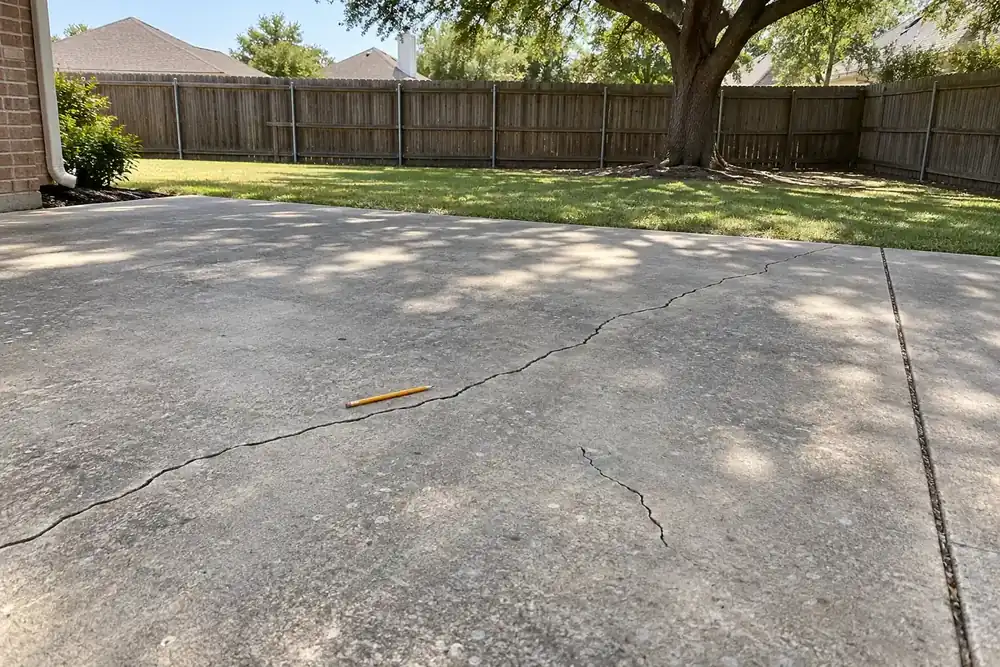
Crack Patterns Help Shape the Repair
Crack patterns help your technician decide whether the concern is confined to the surface or involves a moving section. A narrow line, a raised edge and a crumbling panel call for different approaches. Concrete driveway crack repair starts with the condition of the surrounding slab and how vehicles use it.
Early cracks and planned joints
Federal pavement research describes moisture loss and shrinkage as causes of cracking in both fresh and hardened concrete. Control joints create planned lines where shrinkage cracks are encouraged to form.
A crack following a joint is different from an edge that has lifted beside it. Your technician checks the joint, nearby surface and adjoining panels together. A thin opening viewed from above cannot establish whether a crack stops near the surface or passes through the slab.
Water, roots and uneven sections
Changes beneath a slab matter when one side rises, sinks or loses support. Texas A&M AgriLife Extension describes smectite clay as swelling when wet and shrinking when dry; your technician assesses the soil at the property rather than assuming every lot behaves alike.
During the call, mention puddles, runoff beside the slab, nearby trees and any recent change in height. Your technician considers whether roots, drainage or past use by heavy vehicles could be contributing to movement. Those observations help frame the assessment without diagnosing a cause from a photograph.
Patching, leveling or replacing a section
Patching addresses suitable localized damage, leveling addresses a sunken section that remains a reasonable candidate, and replacement removes sections too damaged to retain. For concrete patio crack repair, the assessment also considers doors, walking routes and where water would flow after work.
| What you see | What it often points to | What usually happens |
|---|---|---|
| Fine line with even edges | Possible shrinkage without an obvious height change | Assess movement and decide whether treatment is useful |
| Crack with a sunken side | Uneven support or settlement worth investigating | Consider leveling if the panel remains suitable |
| Raised section near a tree | Possible root involvement requiring assessment | Evaluate the tree conflict and repair scope together |
| Several broken, loose sections | Damage beyond a single localized opening | Discuss section replacement and contributing conditions |
Your technician examines exposed edges where accessible, the crack pattern and changes between panels. Further assessment may be needed when the crack's depth is hidden. Flatwork here means driveways, patios, walks and pads; movement in house walls or beneath the house is a foundation question for a structural engineer or foundation specialist.
Access and approvals shape the scope
Access affects removal, material delivery and whether a truck or pump can reach the repair. Narrow gates, trees beside the route and a sloping driveway belong in that discussion. Mention any HOA approval process for visible changes, and ask Mansfield about permits and right-of-way approvals for work extending toward the street.
Texas811 is the one-call system for underground utility locating before digging. One of our local concrete partners will explain the proposed repair, access needs and price before work begins.
Keeping repaired concrete clear
New or repaired concrete stays clear of people, pets, wheels and furniture until your technician says it is ready. Wet concrete is caustic, so children and pets stay away from the forms. Your technician determines pour timing, protection and curing, including during heat or a freeze.