
Two Surfaces, Different Upkeep
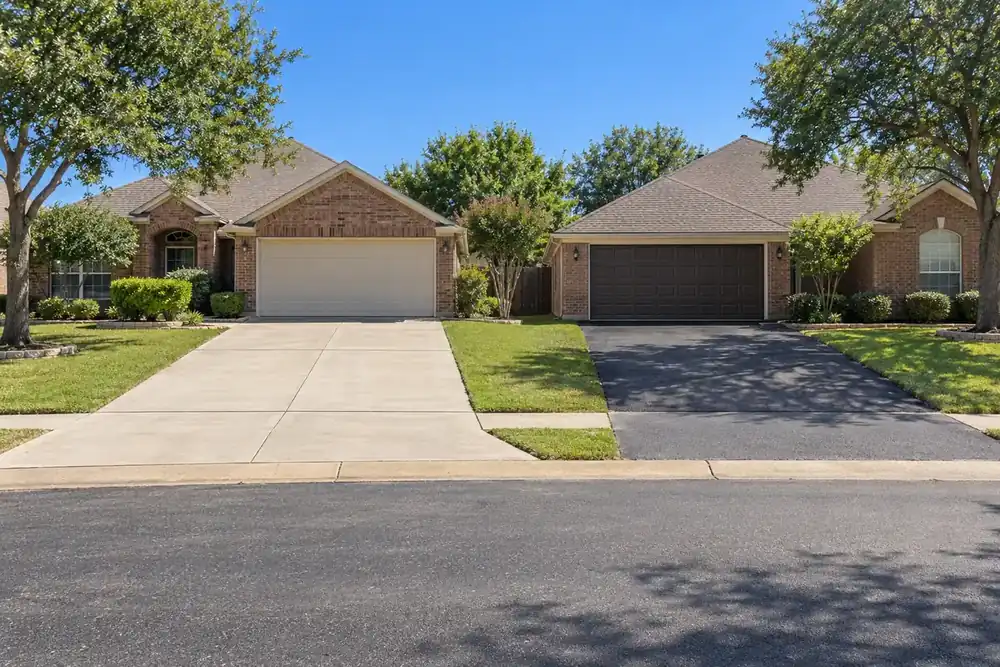
- Concrete offers a lighter surface with visible joints and finish choices, while asphalt gives a darker, more continuous appearance.
- Either surface needs a plan for runoff, suitable preparation beneath it and attention to damage as it develops.
- Choosing between them means weighing the proposed work, future upkeep, household preferences and any HOA approval process rather than assuming one material always wins.
Driveway Materials Depend on the Lot
Concrete and asphalt both provide a paved driveway, but appearance, repair methods and upkeep differ. The useful comparison begins with the lot: how water crosses it, where vehicles turn and how delivery equipment reaches the work. Mansfield TX Concrete connects callers with concrete flatwork services only.
Appearance and weathering
A concrete driveway usually has a light gray surface, visible joints and a choice of plain or decorative finishes. Asphalt, also called blacktop, begins darker and can weather toward gray. Stains, patches and worn areas can show on either material, and repaired sections may look different from the surrounding surface.
Comparing concrete with blacktop should include how the finished surface fits the house and neighboring drives. Decorative borders introduce another choice: the pattern, color work and finishing involved affect how stamped concrete compares with a plain finish. A plain driveway may suit an owner who prefers fewer decorative details to maintain. For an adjoining concrete patio, compare plain and stamped concrete finishes alongside the driveway's look.
Heat, sun and surface care
Sun warms both surfaces. Surface color and shade deserve attention when comparing a light concrete finish with dark asphalt. Texas transportation guidance describes how high temperatures soften asphalt binder under slow or standing truck traffic. That is a material consideration, not a prediction of damage to every driveway.
Fresh concrete needs controlled moisture and temperature during curing, as described in federal pavement research. Discuss which parts of the driveway receive direct sun or shade with your technician, who decides placement timing and protection for the conditions.
Upkeep and repair methods
Concrete upkeep can include sealing, localized crack treatment and resurfacing where the existing slab is suitable. A sunken concrete panel may need assessment for leveling, while heavily broken sections may call for replacement. A surface treatment does not correct continuing movement beneath a slab.
Asphalt maintenance can involve crack filling, sealing and resurfacing, with localized patching for damaged areas. Widespread deterioration may lead to replacement. Neither sealing nor a fresh surface substitutes for addressing drainage or poor support.
| Question | Concrete | Asphalt |
|---|---|---|
| What look does it give? | Lighter surface with visible joints and finish options | Darker surface with fewer visible divisions |
| How are local defects addressed? | Crack treatment, suitable leveling or panel replacement | Crack filling or localized patching |
| Can the surface be renewed? | Resurfacing where the existing slab is suitable | Resurfacing where existing pavement conditions allow |
| What needs attention below it? | Support, drainage and movement | Preparation, drainage and settlement |
| What does upkeep involve? | Sealing and repairs based on wear | Sealing, crack filling and repairs based on wear |
Budget, access and future plans
Cost comparisons between concrete and asphalt are useful only when the proposals cover the same site conditions. Removal, hauling, preparation, drainage changes and access belong in both scopes. A narrow route or overhead branches can affect how materials reach the work and whether concrete placement needs a pump.
When weighing a concrete driveway or asphalt surface, discuss how long you expect to stay and the upkeep you want to arrange. The initial budget matters alongside future attention. To compare the cost of concrete and asphalt over time, look at the proposed maintenance and repair needs rather than relying on a generic lifespan.
Tree roots, existing slopes and the condition of soil beneath the drive deserve assessment with either choice. Mention HOA restrictions on material or appearance during the call, and ask Mansfield which permits or right-of-way approvals apply when changing a driveway near the street. Texas811 provides the one-call system for utility locating before digging.
Arranging concrete work and safe access
One of our local concrete partners will outline the concrete scope and its price with you before the job starts. Concrete driveway services include assessing the existing drive, drainage and access as part of planning the work.
Keep people, pets, wheels and furniture off new or repaired concrete until your technician releases it for use. Children and pets must stay away from the forms because wet concrete is caustic. Your technician sets the pour timing, protection and curing plan, including precautions for heat or a freeze.